In comparison with the touristic sites in Southern Shan State, the sites in this area are much lesser known. But it is equally attractive like southern sites while Lashio is the capital.
Regarding to its impressive structure and beauty together with importance, it is highly regarded as the prettiest bridge in Myanmar and comparable to Westminster Bridge over Thames River in London of England.
It is one of the major towns in Northern Shan State and assumed to the earliest settlement site in Shan State. The city plan is just beautiful and the houses with colorful flowers in front are, of course, neat and lovely. Around the town especially by the Dokehtawaddy River is having a series of orange plantations. The late residence of last Sawbwa is now a garden with modern town hall.
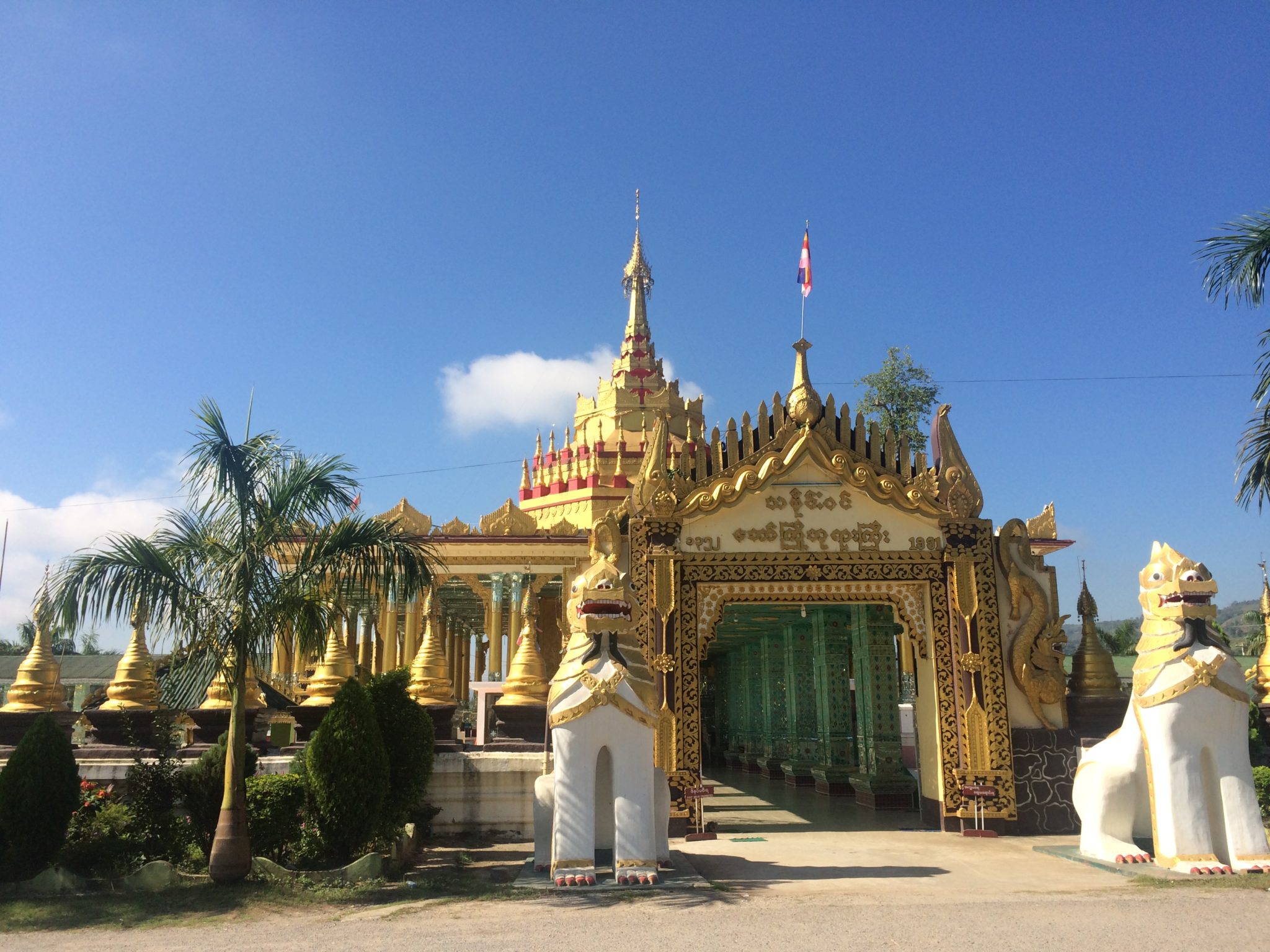
This is the most famous pagoda and biggest of its kind in the respective vicinity, being located 6 miles away from the town. Peculiar in style, the main shrine has four vestibules composed by glass mosaic pillars and a stupa on the roof.
Being known as “The City of Tea leaf”, it is the head quarter of self administrative region for Palaung people and set on small hillocks then one of coldest sites in Myanmar. One curious thing about the mansions is that the structure, stair way, doors and windows of the house are closely similar to one another leading misguiding for the strangers.
On a small hillock nearby the town area, there are numerous religious buildings scattered on both sides of the long covered stair way leading to the summit. The hillock itself is the best view point sharing panoramic view on the pleasant town plan, religious buildings, human dwellings and boundless plantations in and around the town.
Being the center of the tea leaf production, almost every house in this circa has necessary equipment and infrastructure for tea leaf processing. As a result, processing of roasted and pickle tea leaf could be studied from A to Z. The traditional costume of Palaung is really striking and regarded as one of the prettiest dressings.
It is the business center and capital of Northern Shan State. In the city area, the streets are clean and dotted with religious monuments in Thai architecture, Chinese Joss Houses with multiple roofs, Christian Churches in tapening pinnacles, government buildings and mansions. It has become the center for trekking to ethnic villages nearby for the last few years.
Starting at the twilight , the market place is usually active and crowded. You should visit there since you can enjoy the real nature and customs of the local people and ethnic minorities, as well as taste regional foods in an array.
It is not so old and historic pagoda but situated on a higher hillock sharing the best photographic point and bird’s eye view on beautiful scenery with pleasant environs.
Not so far from the city area, it is now a popular recreational site. Water skiing on the outlet, boat on the artificial weir and refreshing in the wellcared landscape and local restaurant nearby are common activities of the area.
If time permitted, stepped lake, natural hot spa and small cave on the mountain slope can be visited.
In comparison with Southern and Northern Shan State, the Eastern Shan State was almost completely blocked to international tourists for years. Once the notorious town for its proximity on the drug dealing, it is now largely changed and regarded as the gate way to the “Golden Triangle” for its better markets and shopping on variety of items, mostly Chinese made goods. It is situated on the west bank, across the river from Mae Sai of Thai and close to the famous Mekong River resulting the starting point for cruising along the majestic river of an unforgettable experience.
The capital of Eastern Shan State, it was formerly known as Kungtung and in existence as the city, at least but not at last, by the closing of 13th century A.D.A picturesque city in itself, the city area is mostly set on sloppings and low hillocks while the city center is around the lake. Unlike anywhere else in Myanmar, it is home to many ethnic minorities. Just like Akha, Lahu, Wa and Anh so on living at the surrounding hilly regions. The morning market at the center of the town usually features a colorful mixture of ethnic groups.
Regarding a century old shady tree, it is so called as Thittabin hill and now defined a recreation site and view point. From a panoramic view, the lake at the center of the city, houses and religious buildings in simulation of Thai architecture, in row by row, could be enjoyed. A newly built standing Buddha and some beautiful monasteries should be visited.
Trekking to the ethnic villages on the mountain slop is common feature of the town, while Akha people are best known for their prettiest traditional customer and head gear.