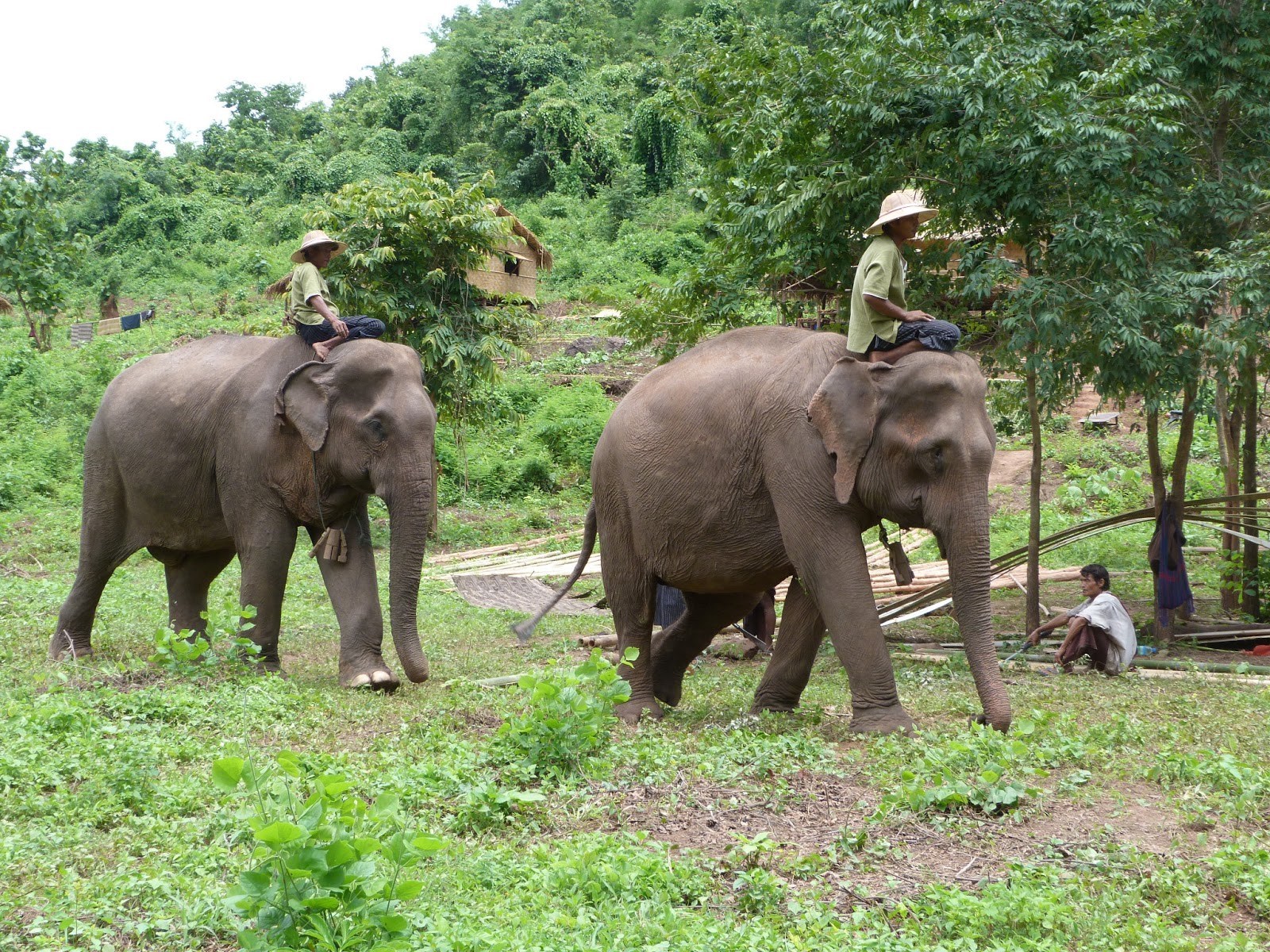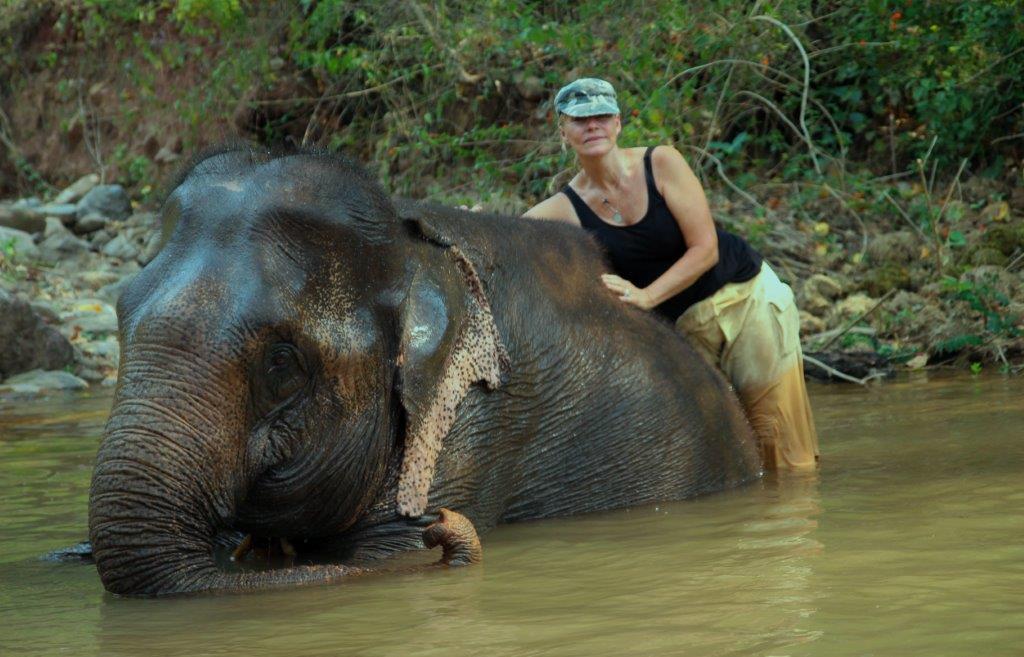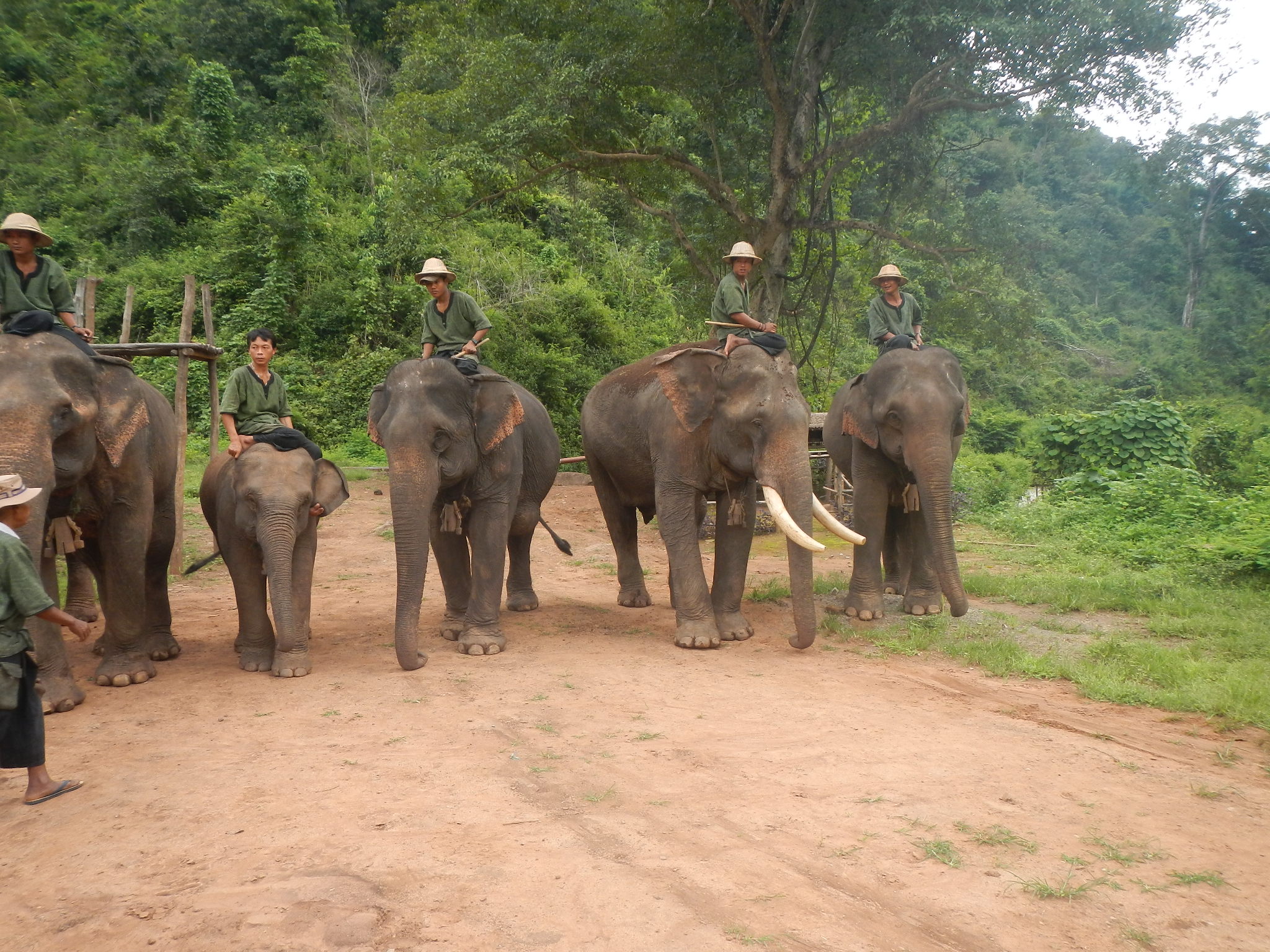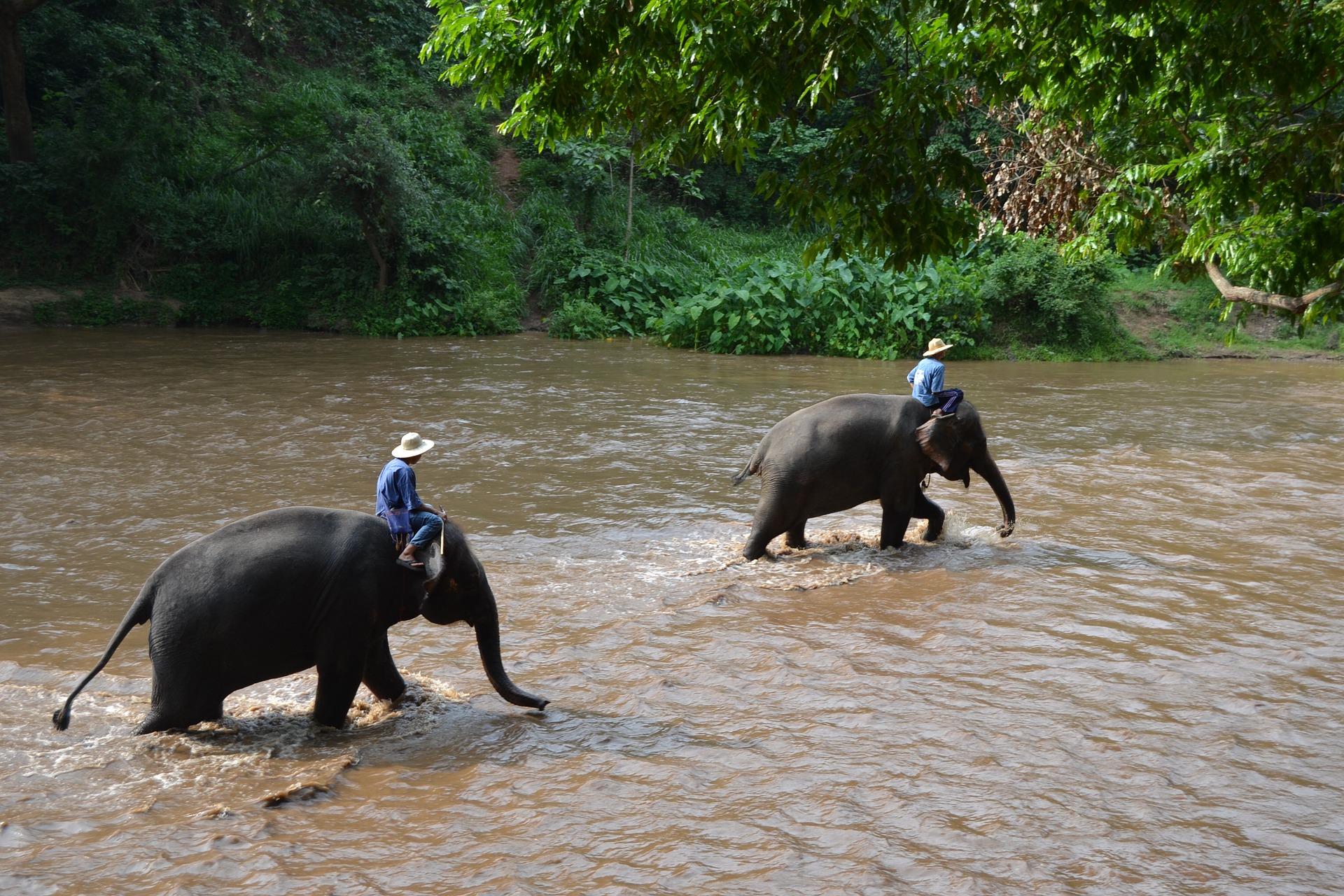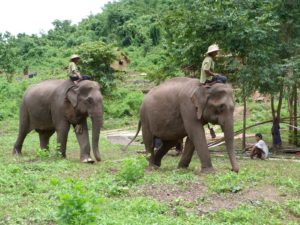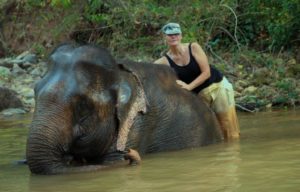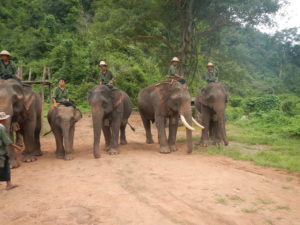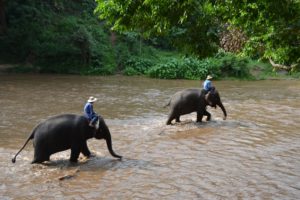
This camp is located in south of the country and easily accessible from Yangon City, and has 28 elephants. Vegetation is primarily deciduous forest, which has Wild Elephant, Barking Deer, Monkeys and other Mammals. Only 50 bird species have been recorded, with many yet to be discovered, it is believed. Highlights would be Racket-tailed Tree pie, Oriental Pied Horn bill, Streak-eared Bulbul, Vinous-breasted Starling and Spotted Owlet.
Observation of Wild Elephants capturing technique and training seeing the elephant show, elephant riding, wild elephant watching, study of the demonstration of logging with elephants and trekking to Mt. Seintaung can be made. The best time to go is from November to April.
Myanmar Elephant Thagara is 205 miles away from Yangon and Pho Kyar Resort is nearly 12 miles away from Thagara.
Yangon to Thagara – Driving Hour (7 Hours) Thagara to Pho Kyar Resort Driving Hour (45 minutes)
7 Bungalows with 2 rooms (room style-twin bed) for Single 30 US$ per person. Double is 35 US$. (Walk-in rate is 36 and 45 US$) Camera Fees, Video Camera, Elephant show, Trekking with elephant for 1 hour. (35 US$per person), Including Breakfast, Dinner is Myanmar Food, Chinese Food can available. Bathroom attached, no fridge, no air con attached with mosquito net, Log-House Style. Electric is with generator from 6:00 pm to 10:00 pm.
Yangon – Taunggu = 176 miles (8 hours) Taunggu – Thagara = 29 miles (1 hour) Thagara – Pho Kyar = 12 miles (45 minutes)
Popa – Taunggo = 173 miles (7 hours)
Popa – Tharzi = 73 miles (3½ hours)
It is located in Mingin township of Sagaing Division, covering an area of 620.35 square miles. Established as a wildlife sanctuary and opened as a national park in 1st of January 1989.
Yangon to Alungdaw Kathapa by car is 981 miles (1570 km). Yangon to Mandalay is 400 miles by air or land, and Mandalay to Alungdaw Kathapa (via Sagaing and Monywa) is 148 miles by car / (off road driving – 40 miles). You have to cross the Chindwin River.
To conserve Biodiversity including flora and fauna. To study and research on ecosystem of plants and animals. To mange forest resources, including biodiversity by establishing as a national park in accordance with the sustainable production policy of natural resources To promote ecotourism.
Forest / vegetation types
Plants include moist upper mixed deciduous forests; dry upper mixed deciduous forests, lower mixed deciduous forests, Indaing forests, and pine forests.
In this park only 166 bird species have been recorded, but it is believed many unseen species are yet to be discovered. Here we can see the Pheasant, White-bellied Woodpecker, Blue-eared Barbet, Great and Oriental Pied Horn bills, Hooded Tree pie (Myanmar endemic bird), Red-billed Blue Magpie, Hill Myna, Chestnut-bellied and Velvet-fronted Nuthatches, Bar-winged Flycatcher-Shrike, White-throated Babbler (Myanmar endemic bird), White-bellied Yahiya and many species of waterfowl. One may also see a range of larger animals such as Wild Elephant, Leopard, Cloud Leopard, Gaur, Banteng, Bear, Sāmbhar Deer, Barking Deer, Serow, Goral, Wild Boar, as well as many other small mammals. In addition the observation of butterflies (recorded in about 200 species), plant and orchid, elephant riding and trekking in several types of natural forest and visiting the historical famous Alaungdaw–kathapa Shrine can be made.
Conservation of natural forests. Conservation of wildlife including tiger, Carrying out research works and conservation of tiger generations with the assistance of international organizations. Conservation of all-weather road from Kapaing village to Bayana camp. Conducting environmental education programs. Promoting ecotourism.
Worship at the place where Alaungdaw Shinmahar Kathpa has been enshrined. Visiting and conducting research in the least disturbed forest types. Conducting research on tiger conservation and management. Observing intend avifauna species. Study of the growing condition of Indaing forest and Pine forest.
There are guesthouses, log cabins and campsites in the park.
The best time to visit is from November to May.